Hand‑Crank Generator STEM Toy: Power Simple Circuits
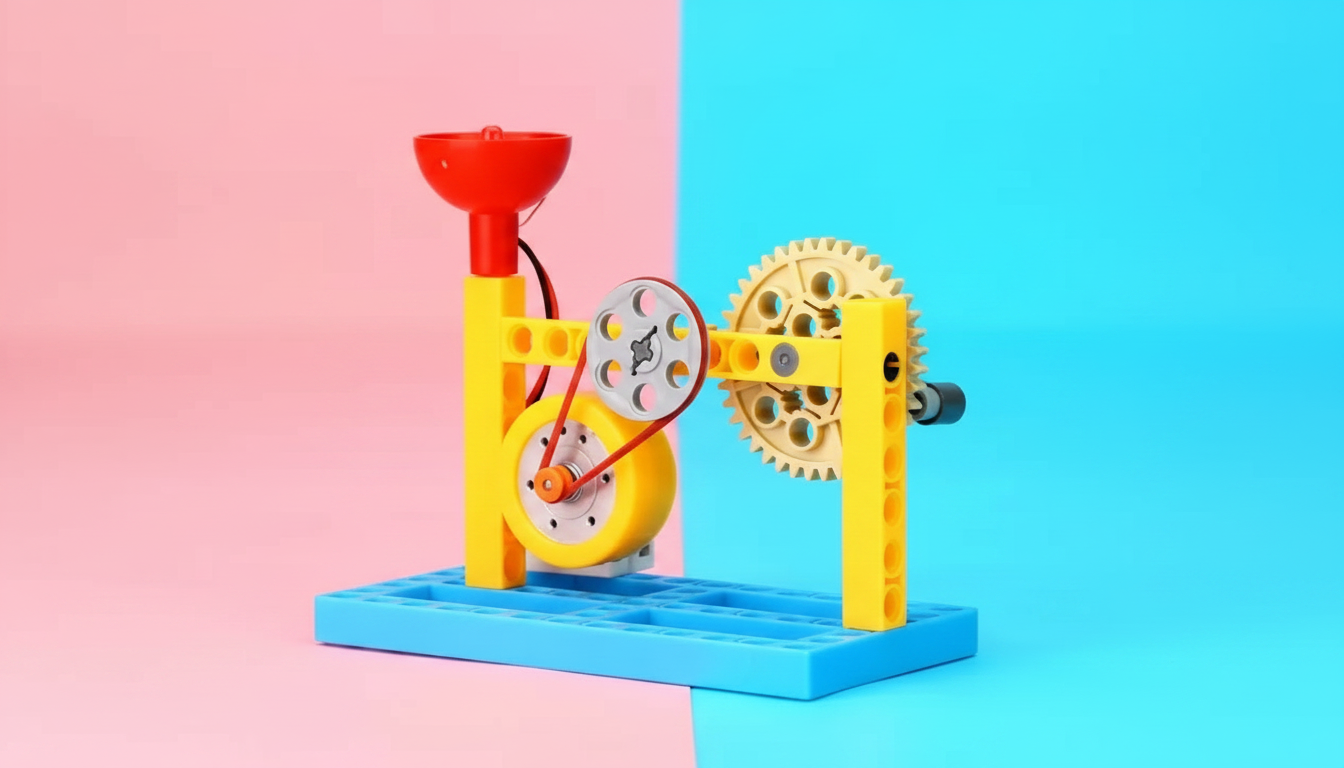
Interactive STEM Hand‑Crank Generator Science Toy for Kids
This hands-on hand‑crank generator set turns a simple turning motion into real electrical output kids can see and test. Instead of memorizing definitions, learners get a direct “turn the crank, see the result” experience that makes energy conversion, circuits, and cause‑and‑effect feel concrete. It’s a practical fit for quick experiments at home, classroom demonstrations, STEM clubs, or science fair practice—especially when students are ready to talk about variables, trials, and observations.
What the Hand‑Crank Generator Teaches
A hand‑crank generator is a small, approachable way to explore big ideas. When kids power something using their own motion, it becomes easier to connect what’s happening in their hands to what’s happening in a circuit.
- Energy conversion: mechanical motion becomes electrical energy through electromagnetic induction.
- Circuit basics: completing a loop, polarity awareness, and why connections matter.
- Variables and outcomes: how cranking speed and consistency change the result.
- Measurement habits: observing, recording, comparing trials, and improving a setup.
Learning goals and easy experiment ideas
| Skill | What kids do | What they observe |
|---|---|---|
| Cause and effect | Crank slowly vs. quickly | Brighter output / stronger response at higher speed |
| Circuit completion | Connect and disconnect leads | Output works only when the circuit is complete |
| Testing and iteration | Try different cranking patterns | More consistent cranking gives steadier output |
| Scientific recording | Write down trial notes and results | Patterns appear across repeated trials |
For background reading that pairs well with this kind of hands-on learning, see National Geographic Education’s overview of energy and Khan Academy’s circuits lessons.
Hands‑On Activities to Try (Home, Classroom, or Club)
These activities are designed to be quick to start but rich enough to repeat, refine, and compare. A simple notebook or one-page lab sheet helps kids treat each attempt like a real trial.
- Speed challenge: Set a timer and compare results at steady speeds (slow/medium/fast). Encourage kids to define what “slow” and “fast” mean for them, then try to repeat it.
- Consistency challenge: Aim for the smoothest, most stable output over 30–60 seconds. Kids can practice keeping a steady rhythm and note when the output flickers or dips.
- Circuit detective: Intentionally make a loose connection and troubleshoot until it works. This builds confidence with connectors and shows how small changes can break a circuit.
- Design prompt: Build a simple “power station” routine—who cranks, who connects, who records results. Rotating roles makes it easier to compare observations across groups.
For science-fair-style extensions and project ideas, Science Buddies’ electricity and magnetism projects can help students turn a quick demo into a structured investigation.
What to Look For in a Kid‑Friendly Generator Set
Not all generator sets feel the same in small hands. If the goal is repeatable experiments (not just a one-time novelty), a few design details make a big difference.
- Comfortable hand crank and stable body: A smooth crank and a base that doesn’t wobble help kids maintain speed without frustration.
- Clear connection points: Simple, easy-to-identify terminals support faster setups and fewer “why isn’t it working?” moments.
- Durable construction: Classroom-style use means repeated connecting, disconnecting, and passing between students.
- Experiment-friendly instructions: The best sets encourage testing multiple variables rather than aiming for one fixed outcome.
- Age guidance and supervision notes: Helpful when small parts, wires, or clips are included.
Safety and Setup Tips
- Adult supervision: Recommended for younger children, especially if small parts or wires are included.
- Keep clear of moving parts: Remind kids to keep fingers, hair, and loose sleeves away from the crank and spinning parts.
- Stay dry: Avoid moisture; use on a dry table surface and store away from sinks or outdoor dampness.
- Be gentle with connectors: Encourage careful attaching and removing to prevent bending or loosening over time.
- Store parts together: Keeping components in one bag or box makes it easier to repeat experiments with the same setup later.
Who This Toy Is Great For
- Curious kids: Especially those who like building, tinkering, and seeing instant feedback.
- Parents: A screen-free science activity with a clear “it works” moment and lots of room for follow-up questions.
- Teachers and club leaders: A compact demonstration tool for energy and circuit basics that can scale from one student to a small group.
- Science fair practice: Great for students learning to describe variables, trials, controls, and observations using simple data tables.
Interactive STEM Hand‑Crank Generator Science Toy for Kids: Quick Product Snapshot
- Product name: Interactive STEM Hand‑Crank Generator Science Toy for Kids
- Price: $21.82 (USD)
- Availability: In stock
More In‑Stock Picks to Pair with STEM Time
If you’re building a small learning-and-play lineup, these in-stock items can round out a hands-on afternoon—one for active play, one for organization.
- 1:20 RC Drift Truck 2WD Off‑Road Crawler with Lights (in stock) — a fun option for exploring motion, steering, and traction through play.
- Large Zipper Makeup & Pencil Bag with Medical Supplies Print (in stock) — handy for keeping small STEM parts, clips, and notes together.
FAQ
How does a hand‑crank generator make electricity?
When you turn the crank, parts inside the generator spin and create a changing magnetic field. That changing field induces an electric current, and cranking faster typically increases the electrical output.
What age is a hand‑crank generator science toy best for?
Many kids in elementary through middle school can enjoy it, especially when they’re ready to compare trials and record results. Younger children may need adult help with making secure connections and following step-by-step experiment routines.
What are good experiments to do with a hand‑crank generator?
Try comparing slow versus fast cranking, steady versus inconsistent cranking, and troubleshooting a deliberately loose connection. For a more “scientific” approach, record each trial in a simple table and repeat the same test to confirm the pattern.










Leave a comment